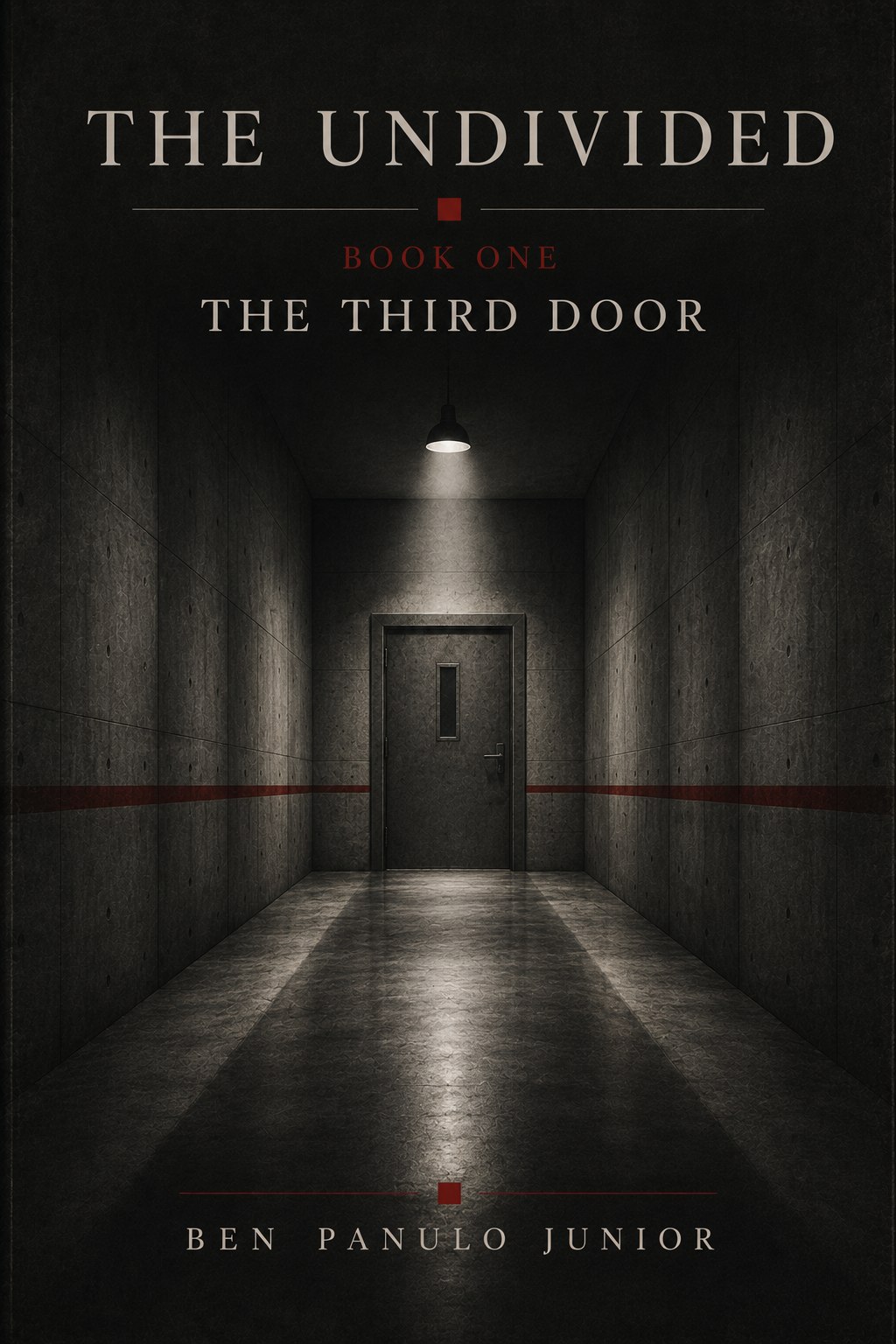
A literary suspense trilogy about grief, memory, and a house that keeps a rule none of its residents have ever noticed.
Nora comes home first, to settle her mother's estate and make sense of a death the coroner has ruled an accident.
Cass arrives uninvited, certain that it wasn't.
Edwin arrives separately, already handling everything, furious that Cass came at all.
Three siblings. One house. And one small, strange, never-discussed fact sitting underneath the whole family: no neighbor, no old friend, no doctor can quite recall the last time all three of them were seen together in the same room.
Across three books, each sibling gives their account of the night their mother died, and each account disagrees with the others in small, quiet, unresolvable ways. A ledger is kept. A journal surfaces, addressed simply to my three — without ever specifying which three. A house waits, one door left permanently unlatched, for whoever might still be coming home.
The Undivided is a trilogy that never tells you what it's actually about. It only asks you to notice — long after you've closed the last page — exactly how carefully it never let you find out.
No resolution offered here. There isn't one on the page, either.
Read closely. Some visitors notice something before they've read a page of the book. Most don't notice until much later.

Nora returns to the family house to settle the estate. Cass arrives convinced their mother was murdered. Edwin arrives already "handling everything," furious she came at all. The three are never in a room together for more than a moment — and Nora starts keeping a private ledger of exactly who said what, and when.
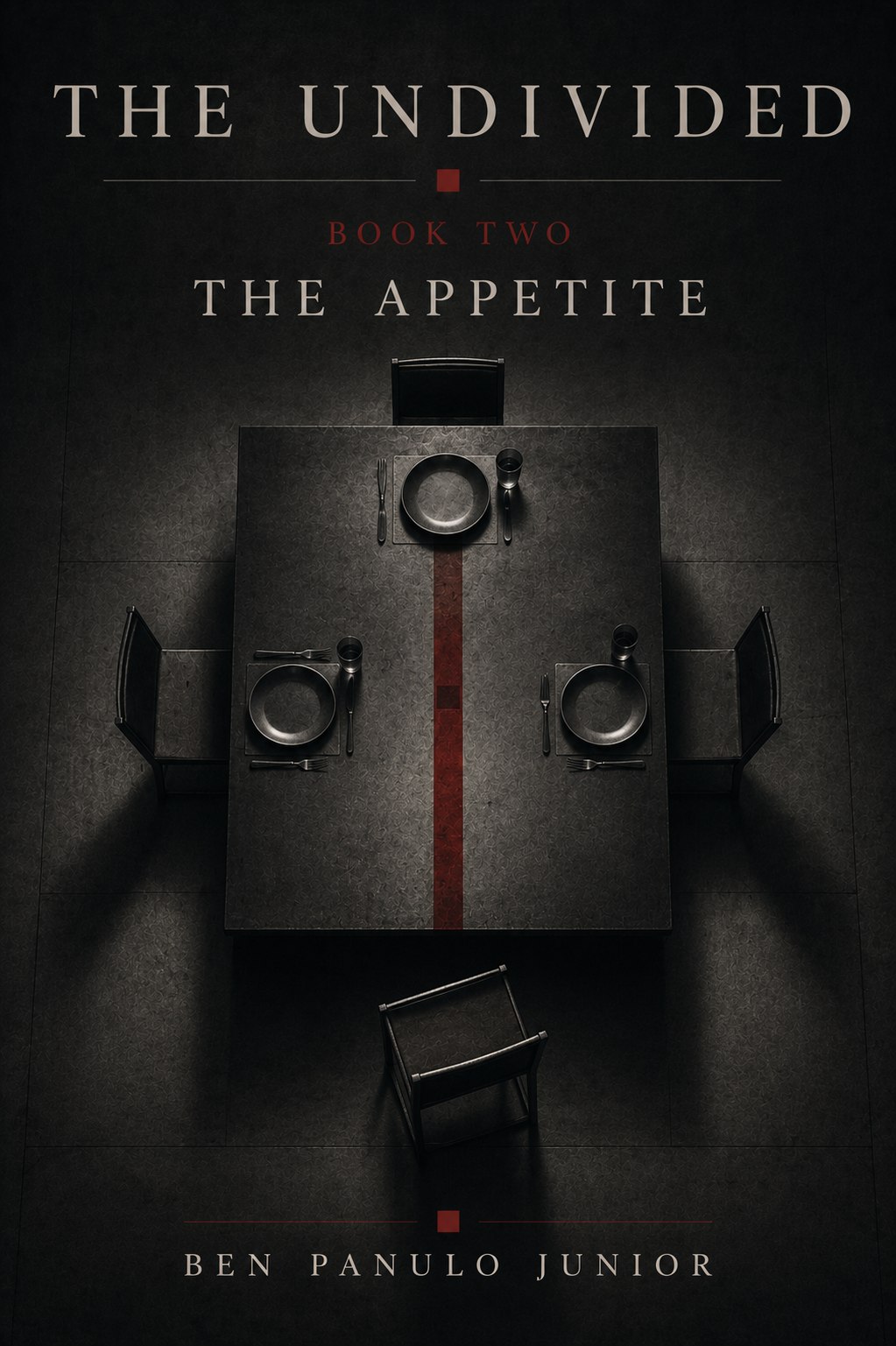
A year later, Cass is unraveling — debt, a reckless affair, a fire that may or may not have been an accident — certain her siblings are hiding something. She's right to be uneasy. She just can't explain why she never quite remembers arriving anywhere.
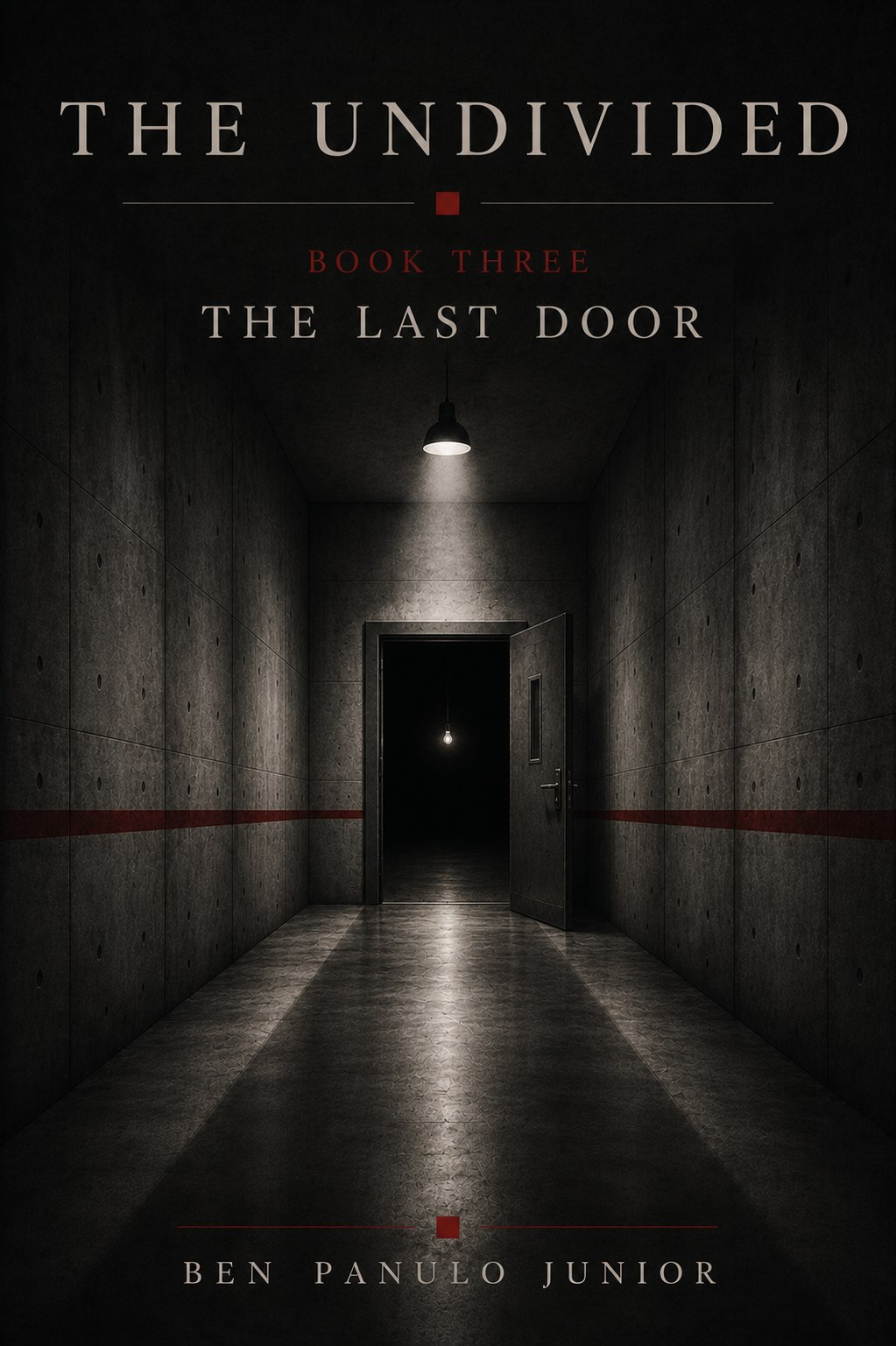
Edwin finally gives his account of that night — precise, moralistic, self-lacerating — and it doesn't match either of his siblings' versions. Not enough to solve anything. Enough to leave you, like Nora, unable to remember the last time you saw all three of them leave through the same door.

No chapter states it. No character says it. You are the only one who ever quite notices.
A carefully maintained internal rule — no reliable witness ever sees two of the three together — that holds across three full novels.
Structured specifically to reward rereading, the way the best unreliable-narrator fiction always has.
Reckless, rigid, and reasonable — each so complete you could believe, and want to believe, they're simply three siblings who loved a difficult mother.
No resolution offered. Judge for yourself.
Three narrators, one for each sibling's account — under discussion for the full trilogy, pending Book Two's completion.
Ben Panulo Junior trained in medicine and spent months working inside Zomba Mental Hospital in Malawi — an experience that sits at the foundation of everything he writes. His fiction moves between mythology-scale speculative thriller and close, literary psychological suspense like this one, but returns again and again to the same question: how much of what any of us believe is actually ours, and how much of it is simply agreement, worn in long enough to feel like truth.
He is also a permaculture farmer based in Blantyre, Malawi, and the author of The Settled, the Dark Continent Universe, Prima Nox, and The Primordial Archive.